When you arrive at Makumu Private Game Lodge, you step into a world where the rules of civilisation fade away. Here, in the heart of the Klaserie Private Nature Reserve, nature unfolds without interference: no scripts, no guarantees, just the raw, unfiltered reality of survival. And that’s precisely what makes it unforgettable.
A safari isn’t always about checking off the Big Five from your camera’s viewfinder. Yes, those moments matter. But some of the most profound experiences come from witnessing something far more intimate: the relationships between predator and prey, the split-second decisions that mean life or death, the constant dance of survival that keeps the African bush alive.
This is the circle of life in the Klaserie, and it’s waiting for you to witness it.
The Dry Season: When Survival Becomes More Visible
There’s something almost theatrical about the dry season in the Klaserie.
As winter approaches, the landscape transforms. The lush grasses fade to golden brown. Water sources that seemed infinite during the rainy season shrink to precious puddles. Vegetation thins out, exposing the architecture of the bush: the twisted acacia trees, the rocky outcrops, the hidden pathways that animals have walked for generations.
For wildlife, these months bring a particular kind of intensity. With limited water and food scattered across the reserve, animals must move further to survive. They converge around the remaining waterholes and feeding grounds. And where there’s abundance, or even hope of abundance, predators are never far behind.
This convergence is what makes the dry season so compelling for safari-goers. The thinning vegetation that challenges the animals’ survival becomes your advantage as a visitor. What might be hidden in the dense green of the rainy season suddenly becomes visible. Animals are easier to spot, more predictable in their movements, and more likely to encounter one another.
But visibility isn’t the only reason the dry season matters. It’s also the season when the tensions that always exist beneath the surface become impossible to ignore. Survival isn’t theoretical anymore: it’s immediate, necessary, and inescapable. And for those watching from a safari vehicle, it’s mesmerising.
The Hunters of the Klaserie
Lions — The Power of the Pride
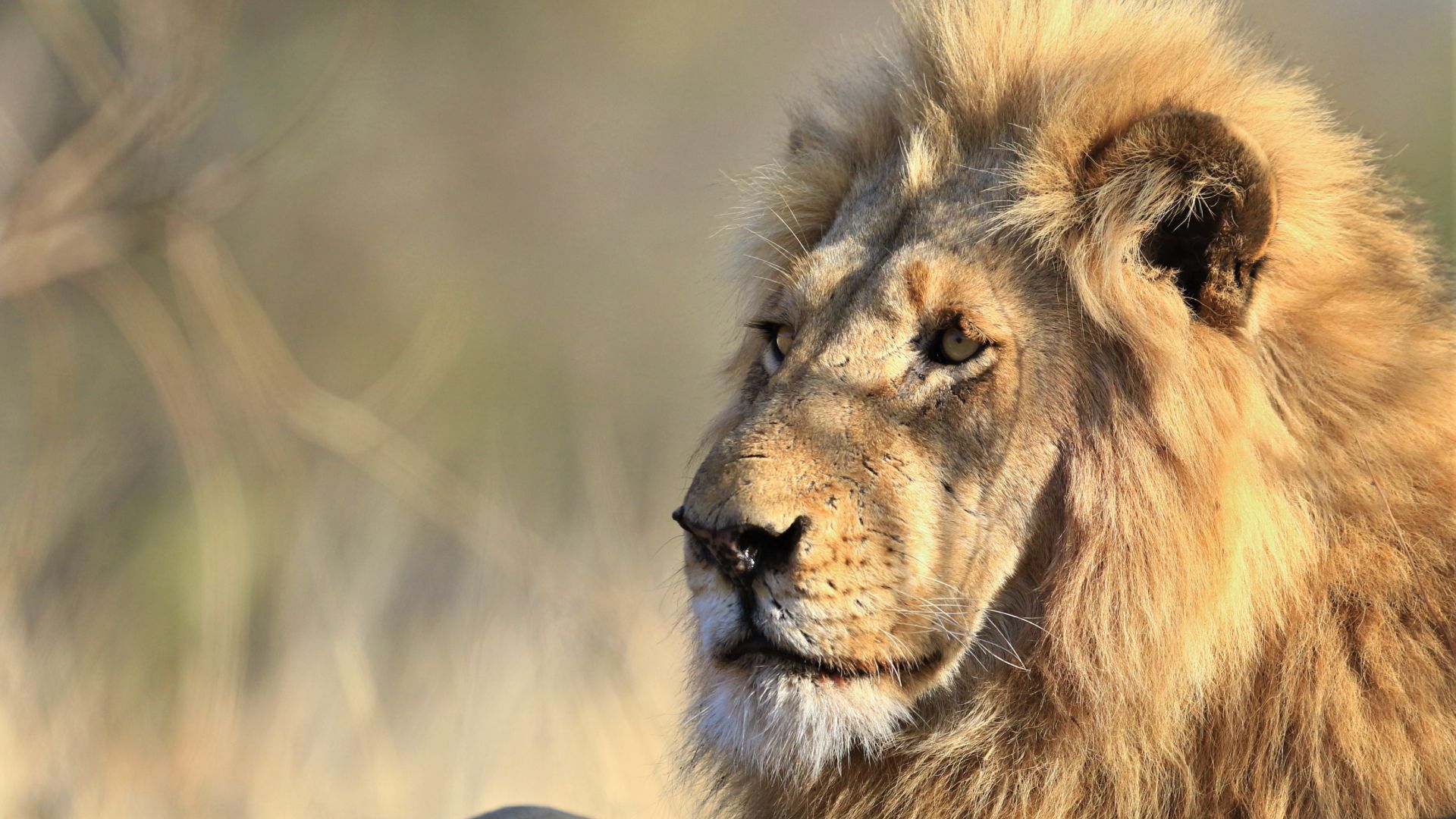
When you see a pride of lions, you’re witnessing more than just apex predators. You’re watching one of nature’s most sophisticated hunting machines.
Lions are deeply social creatures. A pride can consist of up to 15 individuals: related females, their cubs, and a handful of males who defend their territory. This social structure is fundamental to their survival. While a lone lion is vulnerable and largely ineffective as a hunter, a pride is formidable. They communicate through roars that can be heard eight kilometers away. They coordinate. They plan.
Watch a pride on the move, and you’ll see this cooperation at work. The hunters position themselves with precision. Some cut off escape routes. Others move in from the front. The anticipation builds as you watch them stalk through the bush, muscles tense, focused entirely on their target. Will the hunt succeed? Will the prey escape? Even experienced guides can’t always predict the outcome.
This uncertainty is part of what makes lion sightings so memorable. In the dry season, when a pride is active around a waterhole or tracking herds of zebra and wildebeest, you might find yourself holding your breath, not out of fear, but from the sheer intensity of the moment.
Sightings are never guaranteed. This is crucial to understand. Every lion encounter in the Klaserie is a gift, a moment earned through patience and luck. And that’s what makes each one meaningful.
Leopards — The Masters of Patience
If lions are the dramatic hunters, leopards are the ghosts of the bush.
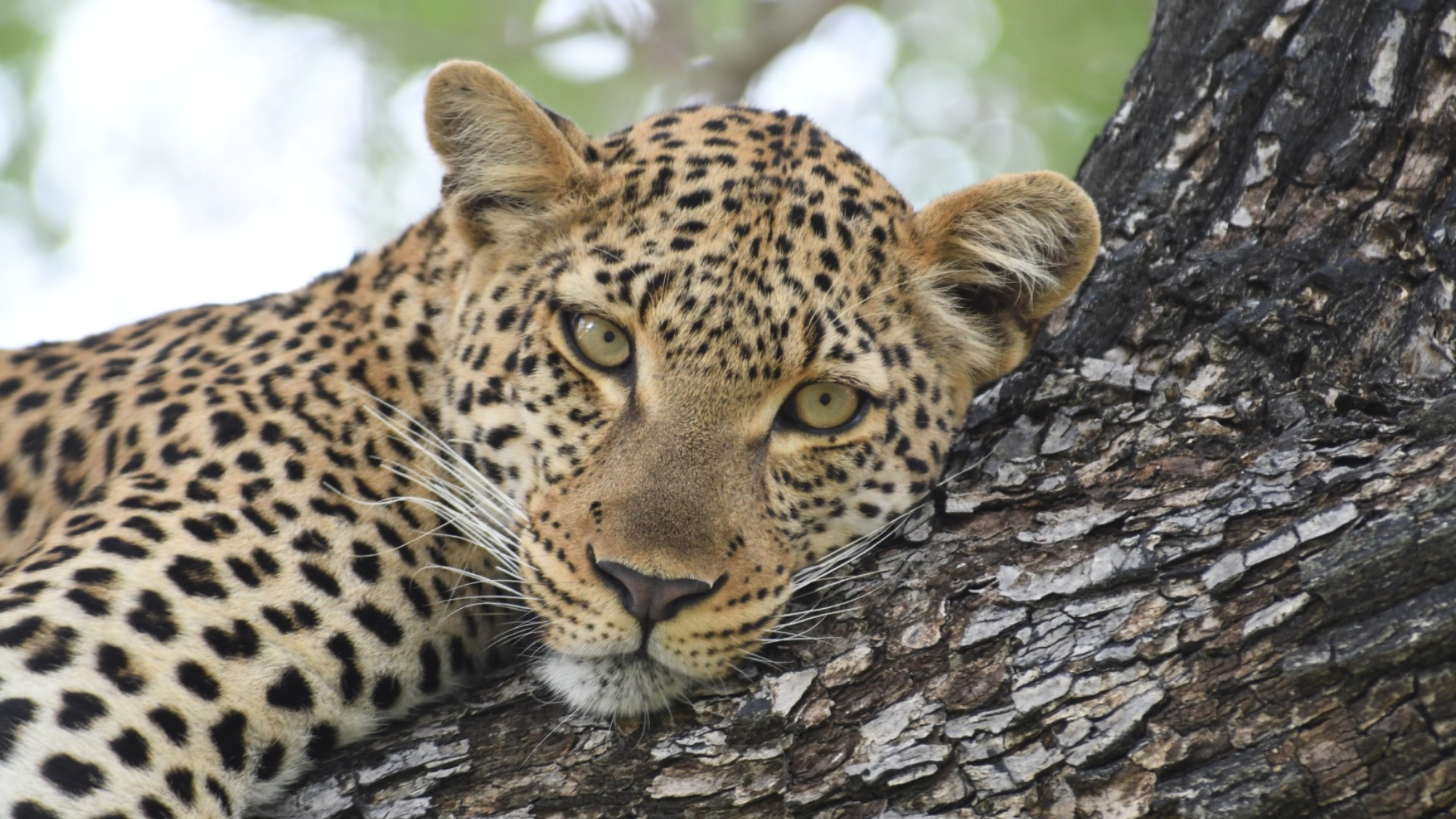
A leopard is solitude personified. Unlike lions, they hunt alone. Unlike wild dogs, you won’t hear their hunting tactics broadcast to the world. They are masters of stealth and camouflage, capable of melting into rocky outcrops, dense vegetation, or the dappled shadows of trees until they’re practically invisible.
Leopards are also largely nocturnal hunters. They prefer the cover of darkness and the cool of early morning or late afternoon. This makes them perhaps the most elusive of all the Klaserie’s large predators. Years can pass between memorable leopard sightings.
But when it happens, when a leopard emerges from the bush and you catch sight of its muscular frame, its distinctive rosette-patterned coat, its intense gaze, it’s a moment that stays with you forever. The rarity of the sighting, combined with the animal’s inherent grace and danger, creates a kind of magic.
Some of the most memorable leopard encounters happen when you’re tracking their movement through the bush. Your guide reads the signs: the direction of an animal’s gaze, the sudden alarm of birds, a trail of disturbed sand. You follow these invisible threads, moving slowly, quietly, until suddenly there’s a flicker of movement, spotted fur, a tail, and then the cat is gone. But you saw it. In the Klaserie, that’s enough.
Wild Dogs — Cooperation in Motion
If you’ve never seen a pack of African wild dogs, prepare yourself for one of the most extraordinary wildlife experiences possible.
Wild dogs are nothing short of remarkable hunters. They’re built for endurance, with long, powerful legs and stamina that few other predators can match. But what sets them apart is their social intelligence. A wild dog pack is a unit of mind-bending coordination.
These animals communicate constantly. A hunt isn’t a spontaneous charge; it’s a tactical operation where each member of the pack understands their role. Some pursue. Others cut off escape routes. Exhaustion isn’t the wolf’s strategy, precision is. They’ll chase prey at sustained speeds, picking the weakest animal from the group and wearing it down through sheer relentless pursuit.
Witnessing a wild dog hunt is to watch nature’s efficiency at work. It’s beautiful and terrible at once. The unpredictability is part of what makes these sightings so memorable. You’re never quite sure what you’ll see next, which is exactly why watching wild dogs on the move is an unforgettable safari experience.
The Other Side of the Story: Life as Prey
For a moment, let’s shift perspective.
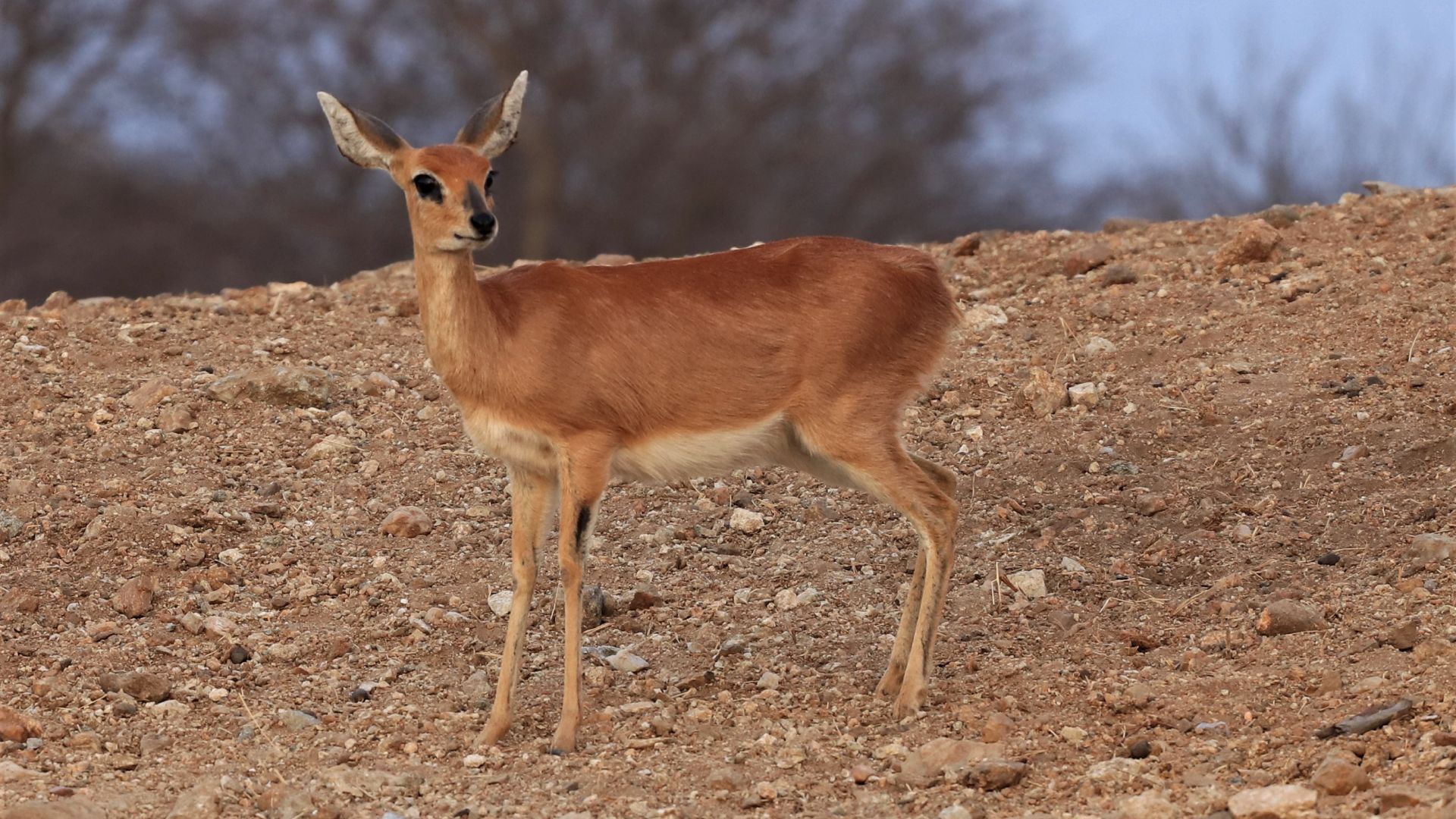
Imagine being an impala, a kudu, a wildebeest or a zebra in the Klaserie during the dry season. Every moment carries risk. Every sound (a branch snapping, a rustle in the grass) could signal danger. Every time you drink from a waterhole, you’re aware that a leopard might be watching from the rocks above.
Prey species in the Klaserie have evolved remarkable strategies for survival. They rely on vigilance and constant awareness of their surroundings. They depend on speed, the ability to burst into flight at a moment’s notice. They use numbers, the safety of the herd, where countless eyes scan for danger. And they communicate through alarm calls, a specific bark or snort that tells other animals: predator.
Watch a herd of impala or wildebeest, and you’ll notice they’re never entirely at ease. Even when they appear to be grazing or resting, their heads come up frequently. Their ears swivel toward sounds. They position themselves on slightly elevated ground, where they have a clear view of approaching danger. This constant tension isn’t visible at first glance, but it’s there, underlying every moment of their lives.
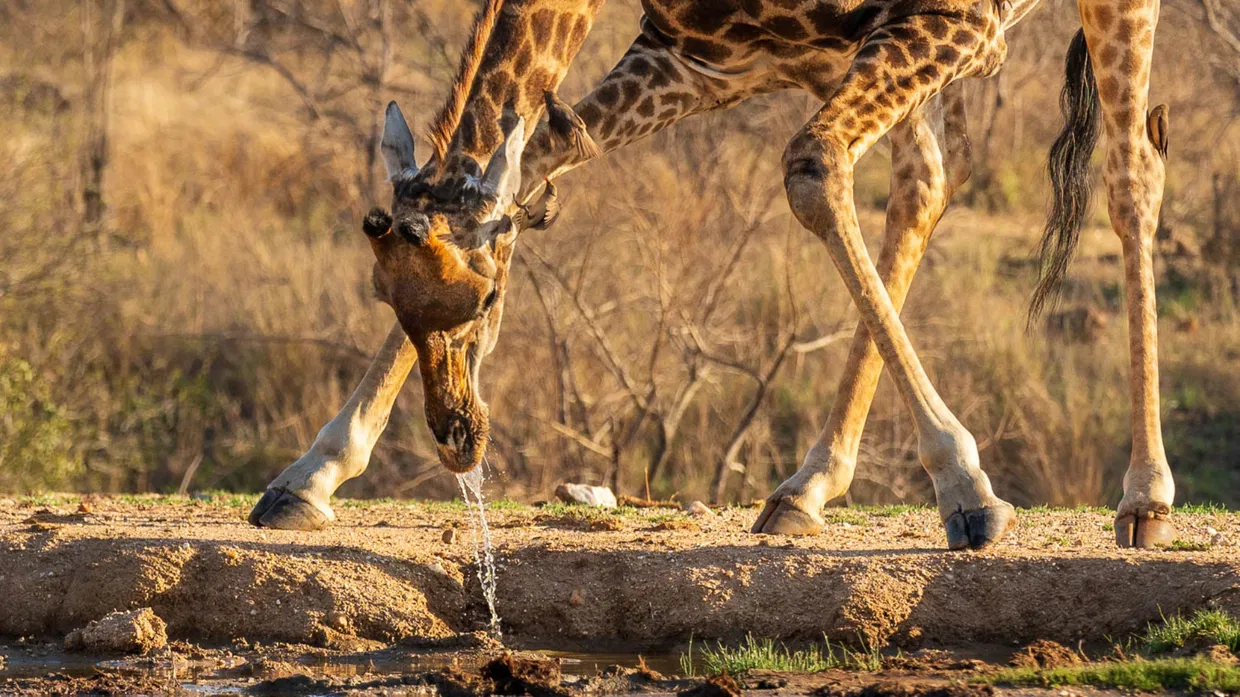
In the dry season, when predators congregate around water sources and food is scarce, this tension becomes even more acute. A waterhole that provides life-giving moisture becomes a calculated risk. Animals must weigh their need for water against the danger of exposure. Many come at dawn or dusk, taking advantage of the poor light. Some send youngsters to drink first, sacrificing the vulnerable to buy time for the group.
This is the reality of life as prey in the African bush. It’s not a story of victimhood, it’s a story of constant, intelligent adaptation.
When Predator and Prey Cross Paths
This is the moment safari-goers dream about. The encounter that unfolds in front of your vehicle. The split second when two species, locked in an ancient dance, reveal the fundamental truth of the wilderness.
What makes these moments so compelling is that the outcome is genuinely uncertain. There is no predetermined ending. A leopard’s stalk might fail. A wild dog’s chase might end with the prey escaping to rocky terrain where the predators can’t follow. A lion’s ambush might be detected at the last moment, and the herd scatters, leaving the hunter empty-handed.
Nature doesn’t follow a script. Your guide doesn’t have a script. You don’t have a script. All you have is patience, presence, and the willingness to witness what actually unfolds.
This is why patience is so important on a Klaserie safari. Your guide might spot tracks – a leopard’s paw prints in the dust, the scat of a wild dog pack. They might hear alarm calls that suggest a predator is nearby. They might simply position your vehicle where the water, the cover, and the likely movements of animals suggest something might happen.
And then you wait.
The vehicle falls silent. Conversations drop to whispers. Cameras are ready but quiet. The bush around you is full of life, you can feel it, but nothing seems to be happening. Seconds stretch into minutes. Minutes stretch into longer periods.
And then it does happen. A pride emerges from behind a cluster of trees. An impala bolts, and others follow. A leopard’s tail twitches in the tall grass. The moment is vivid, immediate, and utterly real. You’re not watching it on a screen; you’re there, experiencing the raw edge of nature.
These moments don’t always follow human ideas of fairness. Sometimes they’re violent. Sometimes they’re uncomfortable. But they’re always real.
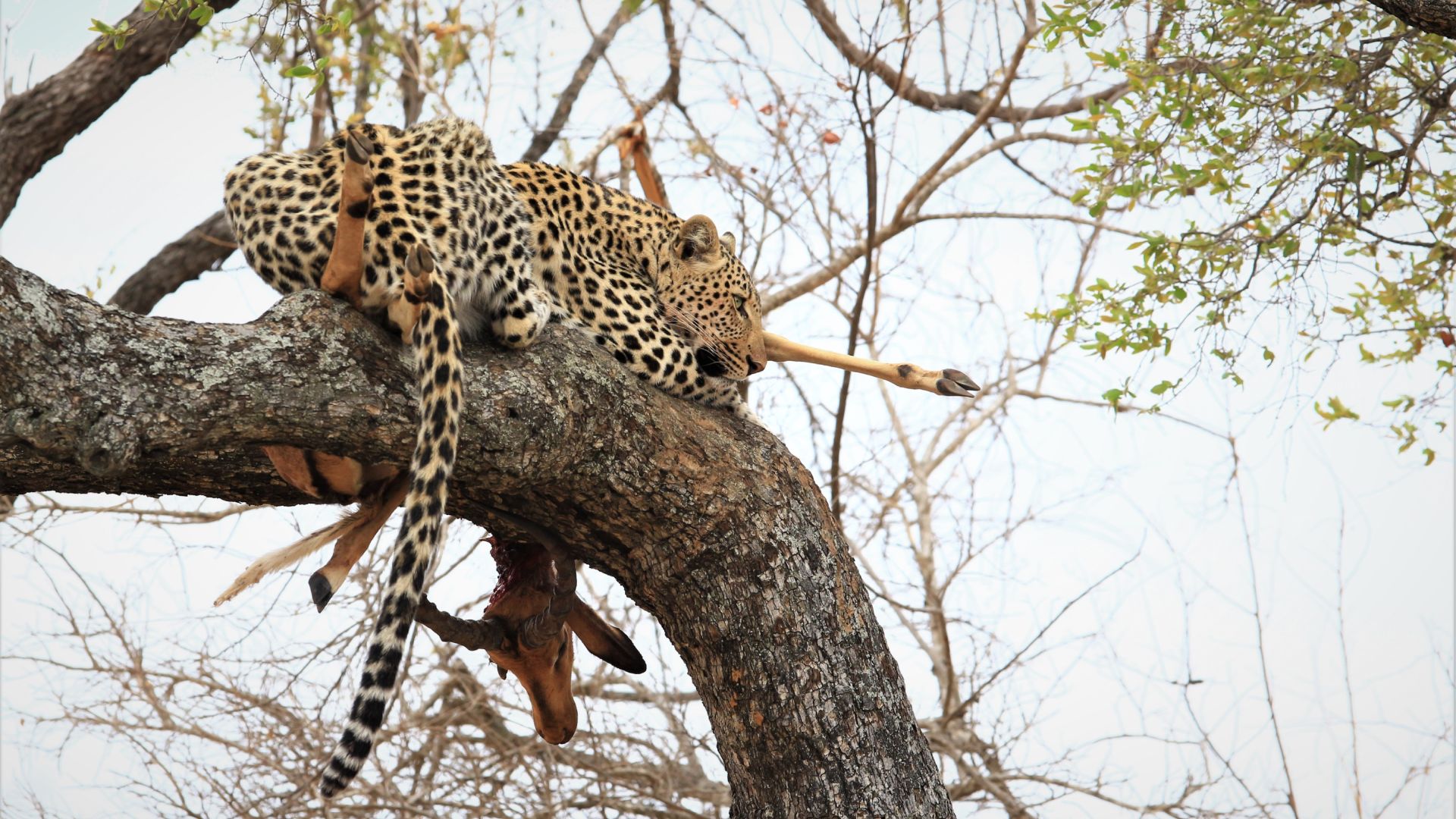
Nature Is Not Cruel, It Is Necessary
Here’s something that’s important to acknowledge: a kill isn’t beautiful. A predator taking down prey isn’t a story with a neat moral conclusion. If you’re sensitive to these things, a safari during the dry season might confront you with scenes that are difficult to watch.
But here’s what’s equally important to understand: predation isn’t cruelty. It’s necessity.
Every hunt, every kill, every moment of predation is essential to the functioning of the ecosystem. When a lion takes down a wildebeest, that lion is fed. But more than that, the predator is regulating the prey population. Without predators, herbivore populations would explode. Overgrazing would devastate the landscape. The entire ecosystem would collapse.
Predators are not villains in the circle of life. They’re essential participants. They’re the regulators, the balancers, the force that keeps the entire system in check. When you witness predation in the Klaserie, you’re witnessing the ecosystem working exactly as it should, complex, sometimes harsh, but fundamentally alive.
This perspective doesn’t make a kill easier to watch. But it does help you understand it as something other than tragedy. It’s part of a much larger story, and that story is essential to the survival of the wilderness.
The Circle Continues
Every animal in the Klaserie is part of something larger than itself.
That successful hunt? It’s not just about one predator surviving another day. It’s about ecological balance. The escaped impala that bounds away isn’t just one individual living another day, it’s the future of its species, the genetic continuation of prey populations that have evolved for millennia to survive.
A lion resting after a kill. A herd gathering at a waterhole at dawn. A leopard moving through the night. A wild dog pack communicating across the savanna. An impala’s alarm call. A kudu’s vigilance. All of it is connected. All of it is part of the same intricate system.
This is what a safari in the Klaserie is really about. It’s not about ticking animals off a list. It’s about understanding, deeply, viscerally, unforgettably, that you are witnessing something that has existed for millions of years. That the instincts, the struggles, the triumphs and the tragedies you’re observing are the same ones that kept this ecosystem alive before humans arrived and the same ones that will keep it alive long after we’re gone.
In the Klaserie, the circle of life isn’t something you learn about from a textbook or a documentary. It’s something you witness unfolding in front of you. The raw drama, the essential beauty, the complicated truth of a world where survival is the only story that matters.
And when you experience that, when you truly see it, the circle of life transforms from a concept into a living, breathing, undeniable reality.
Welcome to the Klaserie. The circle is waiting.